
7 Back-to-School Safety Tips Every Parent Should Know
As we prepare for another school year, ensuring children’s safety and well-being is a top priority. Whether your child is heading to kindergarten or high school, here are some essential safety tips for parents to keep in mind as the school gates swing open again. Feel free to share these tips on your website and social media.
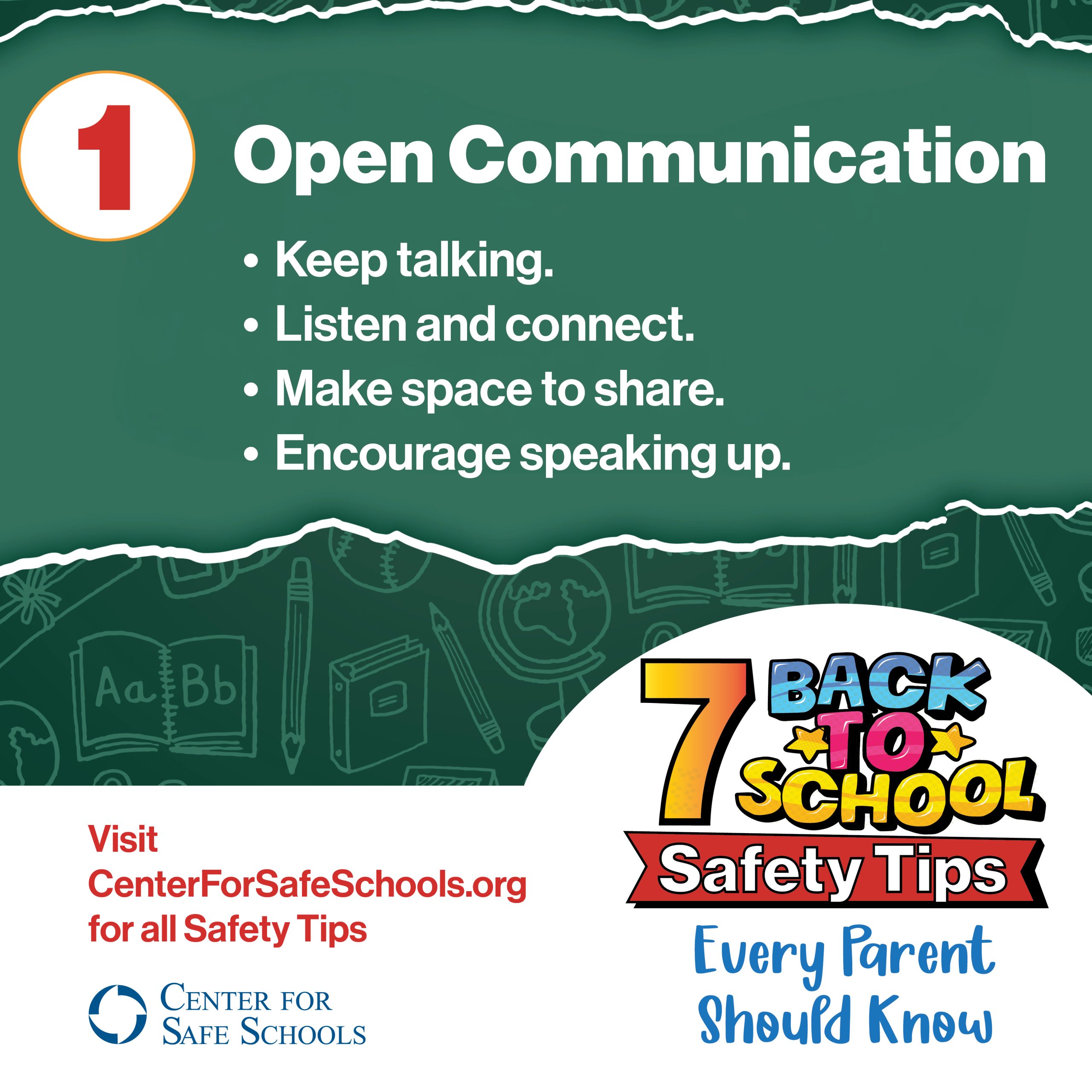
1. Open Communication
Encourage your child to share any concerns about safety, interactions with peers, or unusual incidents with you. When you know how they are feeling, you can address issues promptly. You may also want to research how your child can report safety concerns, particularly through anonymous reporting tools available by the school.
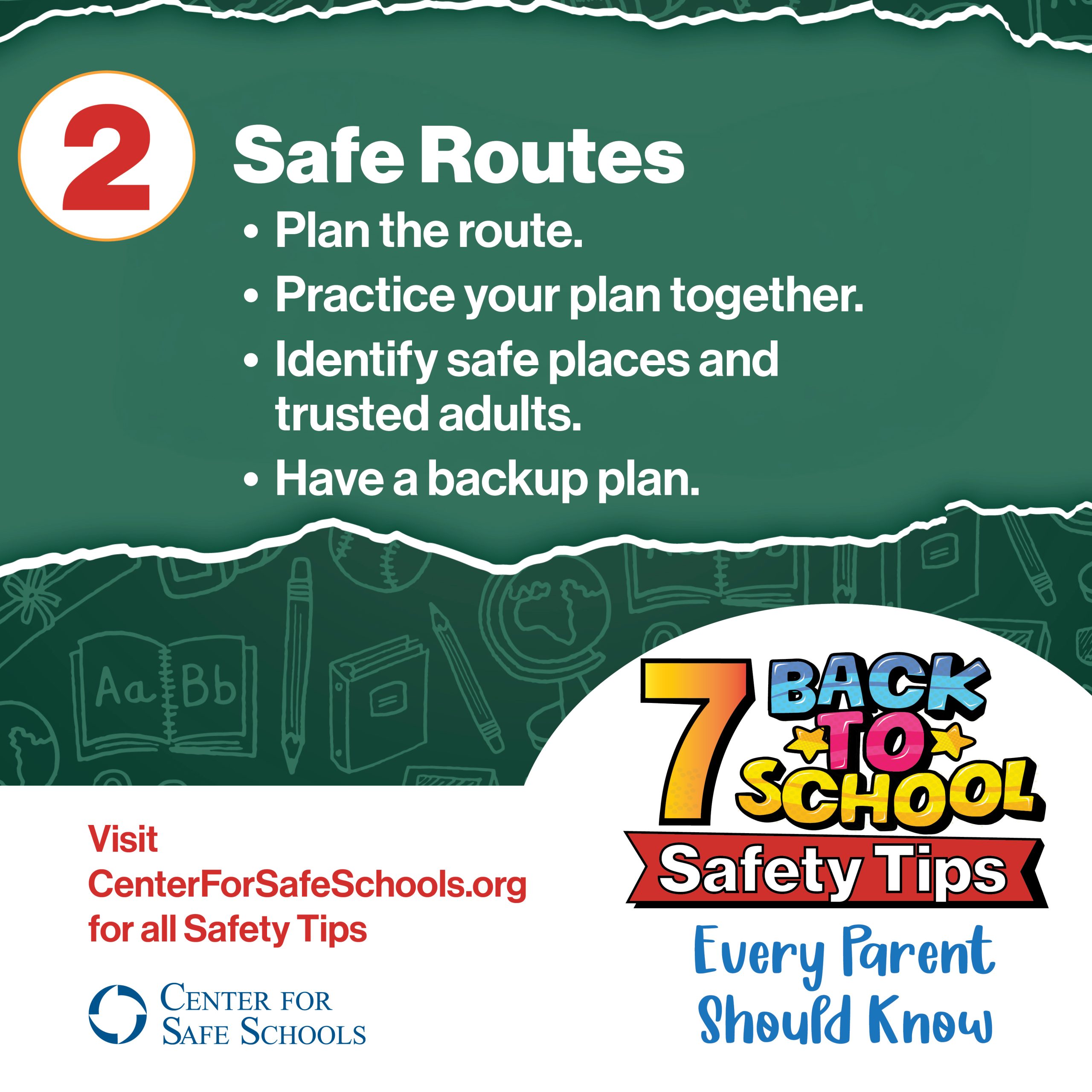
2. Safe Routes
If your child walks or bikes to school, help them plan safe routes that minimize exposure to busy roads and dangerous intersections. Practice the route together until they are comfortable navigating it independently. Remind them to wait in well-lit areas, cross streets at designated crosswalks, and avoid distractions, such as headphones, while walking near traffic. (www.saferoutesinfo.org)
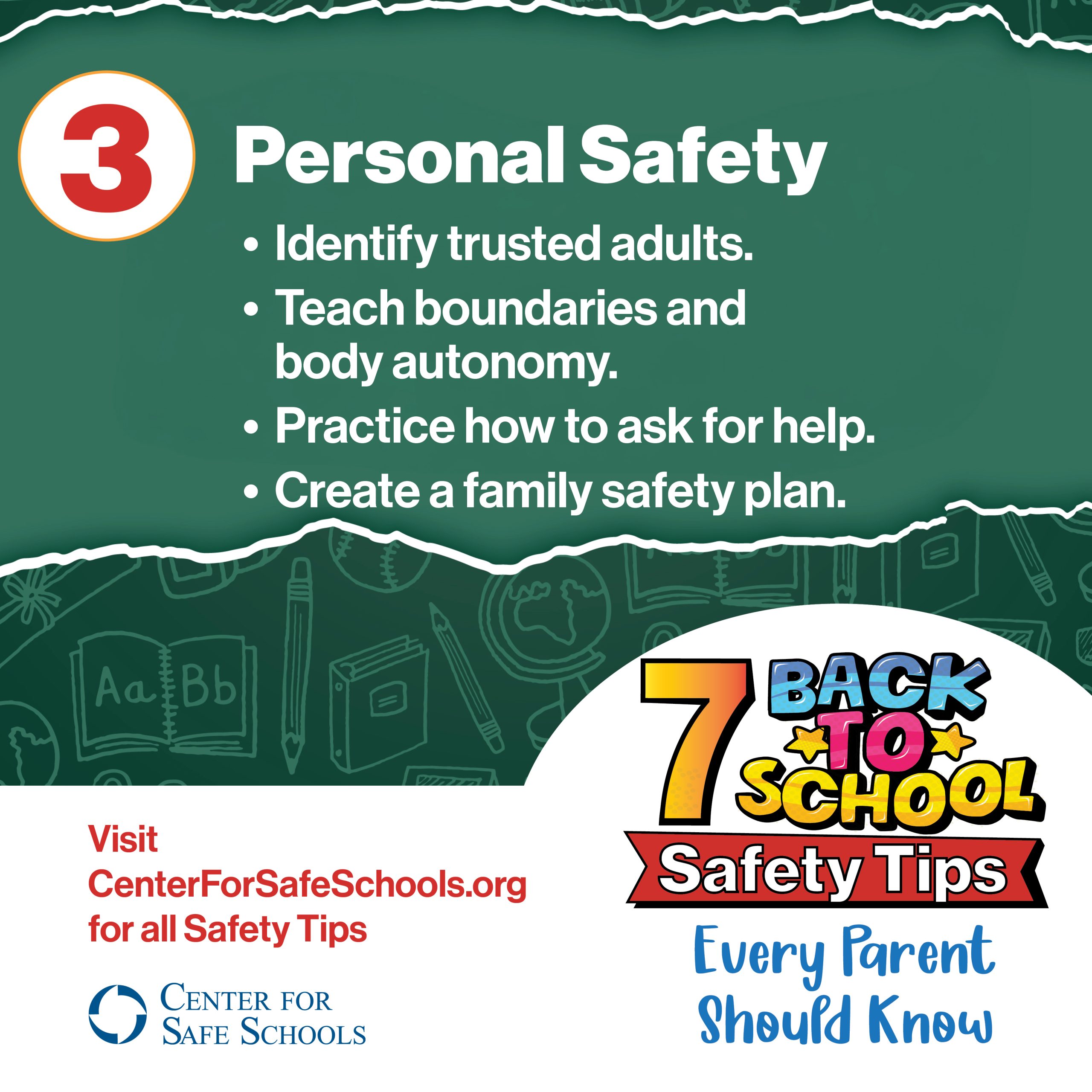
3. Personal Safety
Review personal safety with your child, regardless of age. Be careful using the popular term “Stranger Danger” as statistically, most child abductions are committed by someone they know. Provide your child with a list of trusted adults they can contact in an emergency. (www.missingkids.org/education/kidsmartz) (www.beaubidenfoundation.org)
4. Digital & AI Safety
Talk regularly with children about staying safe online, including when using social media, games, apps, and AI tools. Remind them to protect personal information and understand that AI-generated content can look or sound real even when it is false. Teach children to pause and check before believing or sharing content and to recognize scams and deepfakes. Most importantly, encourage them to talk to a trusted adult if something online makes them uncomfortable or unsure. Parents and caregivers can also use age-appropriate privacy settings, parental controls, and family technology rules.
5. Emergency Contacts
Make sure your child knows their full name, a parent or caregiver’s phone number, and the name and number of a trusted emergency contact. Encourage them to memorize this information rather than relying only on a phone or other device. Talk about who they can safely ask for help, such as a school staff member, police officer, or another trusted adult, if they become separated from you or face an emergency.
6. Bullying Awareness
Talk with your child about bullying, including cyberbullying, and the importance of treating others with kindness and respect. Encourage them to speak up if they experience or witness bullying and to report concerns to a trusted adult at home or school. Remind your child that asking for help is the right thing to do and that adults can help prevent the situation from continuing or getting worse. (www.centerforsafeschools.org/bullying-prevention/)
7. Emergency Preparedness
The beginning of the school year will likely include a review of emergency procedures at your child’s school. Talk with your child about emergency preparedness to help ensure their safety. By discussing scenarios, creating a plan, and emphasizing the importance of staying calm, you empower your child to respond effectively in unexpected situations.
As a new school year begins, your child’s safety is our top priority. These back-to-school safety tips are designed to help create a secure and supportive environment where every student can thrive. By working together, through communication, education, and preparation, we can make this school year both safe and successful.
On behalf of the Center for Safe Schools, we wish all students, families, and educators a safe and rewarding school year!
Keep the Conversation Going
School safety is an ongoing conversation. Continue learning and exploring these topics with the Center for Safe Schools Recommended Books, featuring resources for parents, caregivers and educators on bullying prevention, digital safety, emergency preparedness, school climate, student well-being and more.